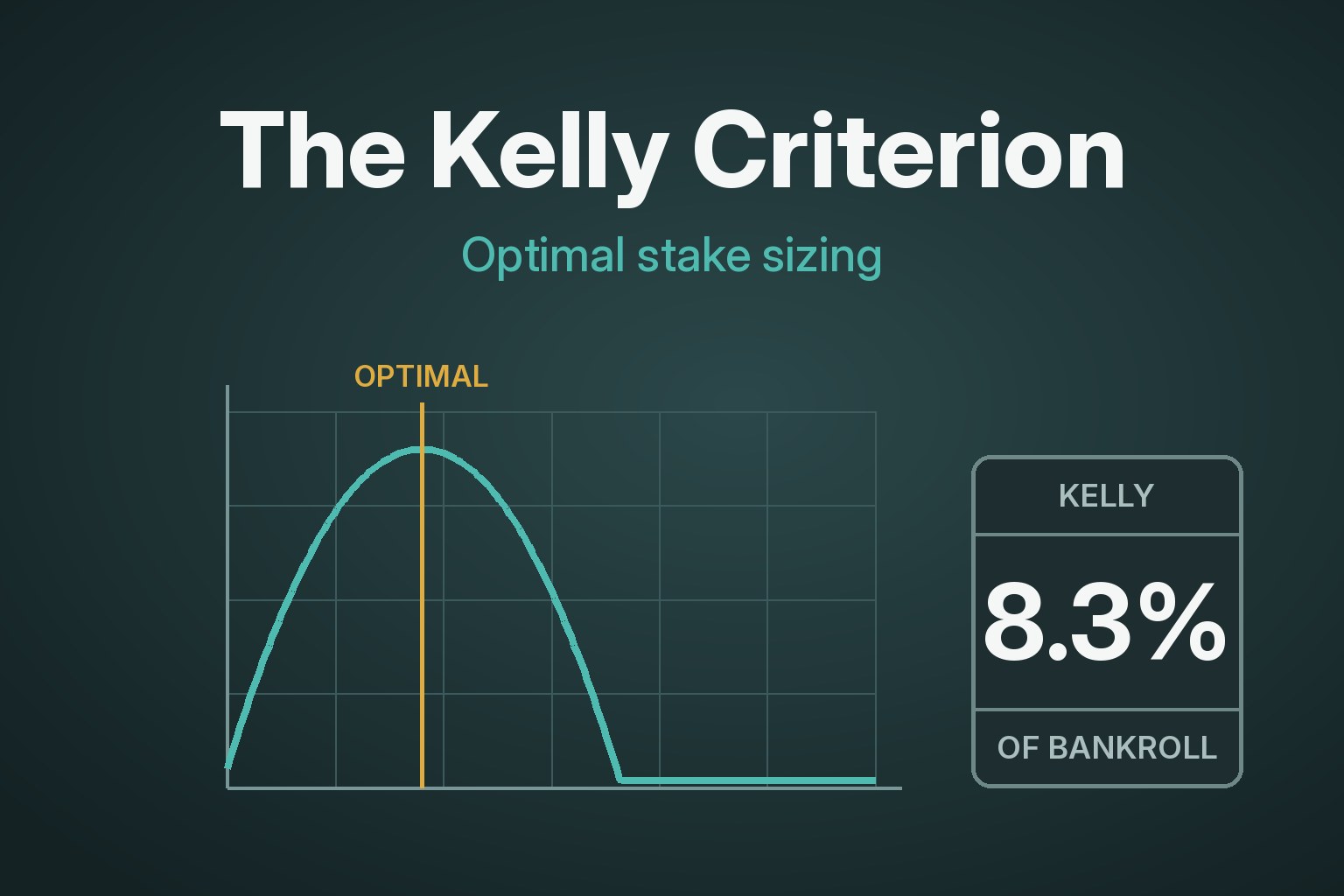
Once you have found a value bet, the next question is how much to stake. The Kelly Criterion is a formula that answers this mathematically. It sizes each bet according to the size of your edge, aiming to grow your bankroll as fast as possible over the long run.
The Kelly formula
f = (b x p – q) / b
f = the fraction of your bankroll to stake b = decimal odds – 1 (the net profit per unit staked) p = your estimated probability of winning q = the probability of losing (1 – p)
A worked example
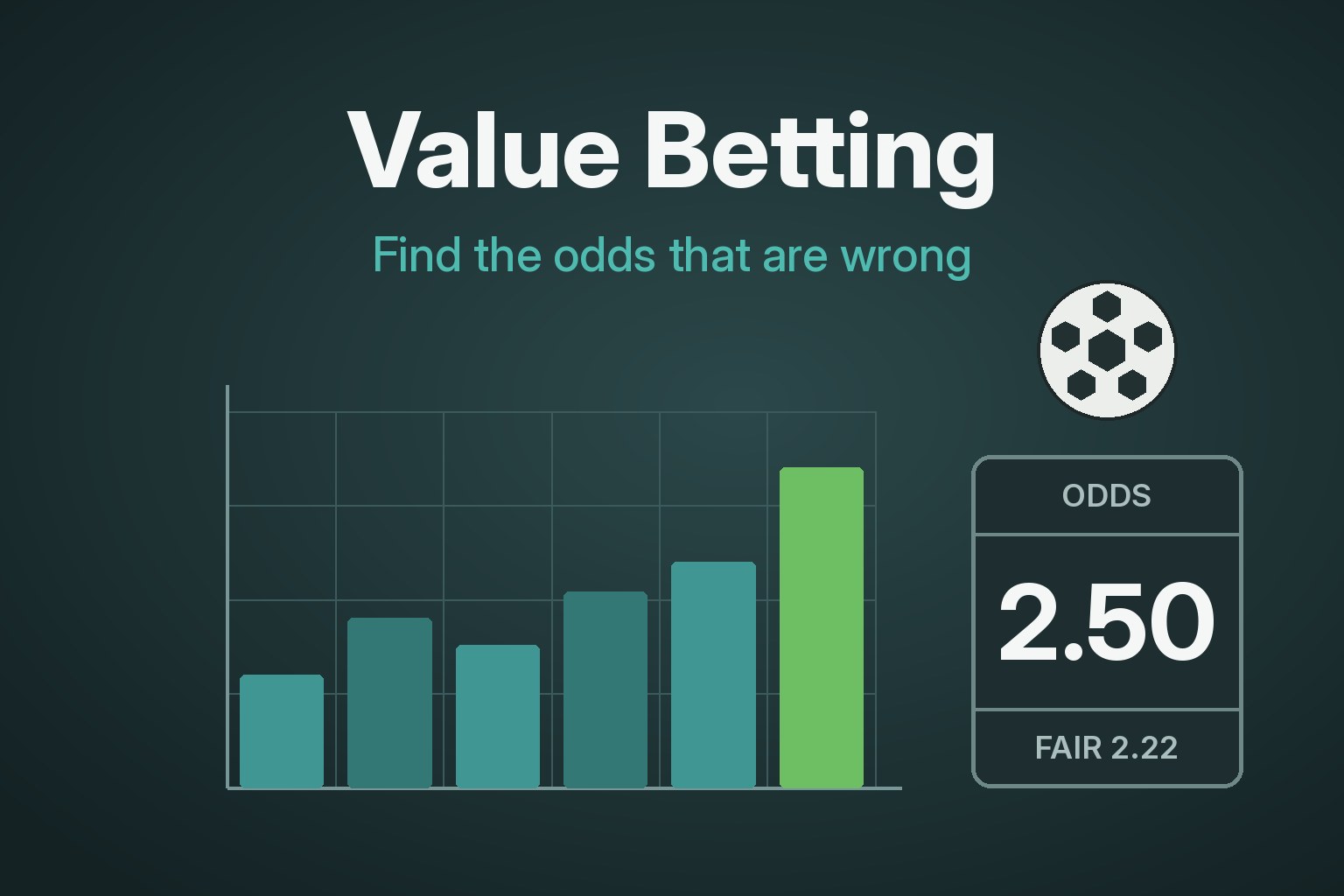
You find a team at odds of 2.50 and estimate their chance of winning at 45%.
b = 2.50 – 1 = 1.5 p = 0.45 q = 0.55
f = (1.5 x 0.45 – 0.55) / 1.5 f = (0.675 – 0.55) / 1.5 f = 0.083, or 8.3% of your bankroll
With a $1,000 bankroll, full Kelly suggests a stake of $83.
If your estimated probability is equal to or lower than the implied probability (40% at odds of 2.50), the formula returns zero or a negative number. That means there is no edge, and you should not bet.
Why most bettors use fractional Kelly
Full Kelly is aggressive. It assumes your probability estimate is exactly right, and in sports betting it never is. Staking twice the Kelly amount reduces your long-term growth to roughly zero while greatly increasing the swings, so overestimating your edge is costly.
For this reason, most professionals use a fraction of Kelly:
Half Kelly: 4.2% of bankroll = $42 Quarter Kelly: 2.1% of bankroll = $21
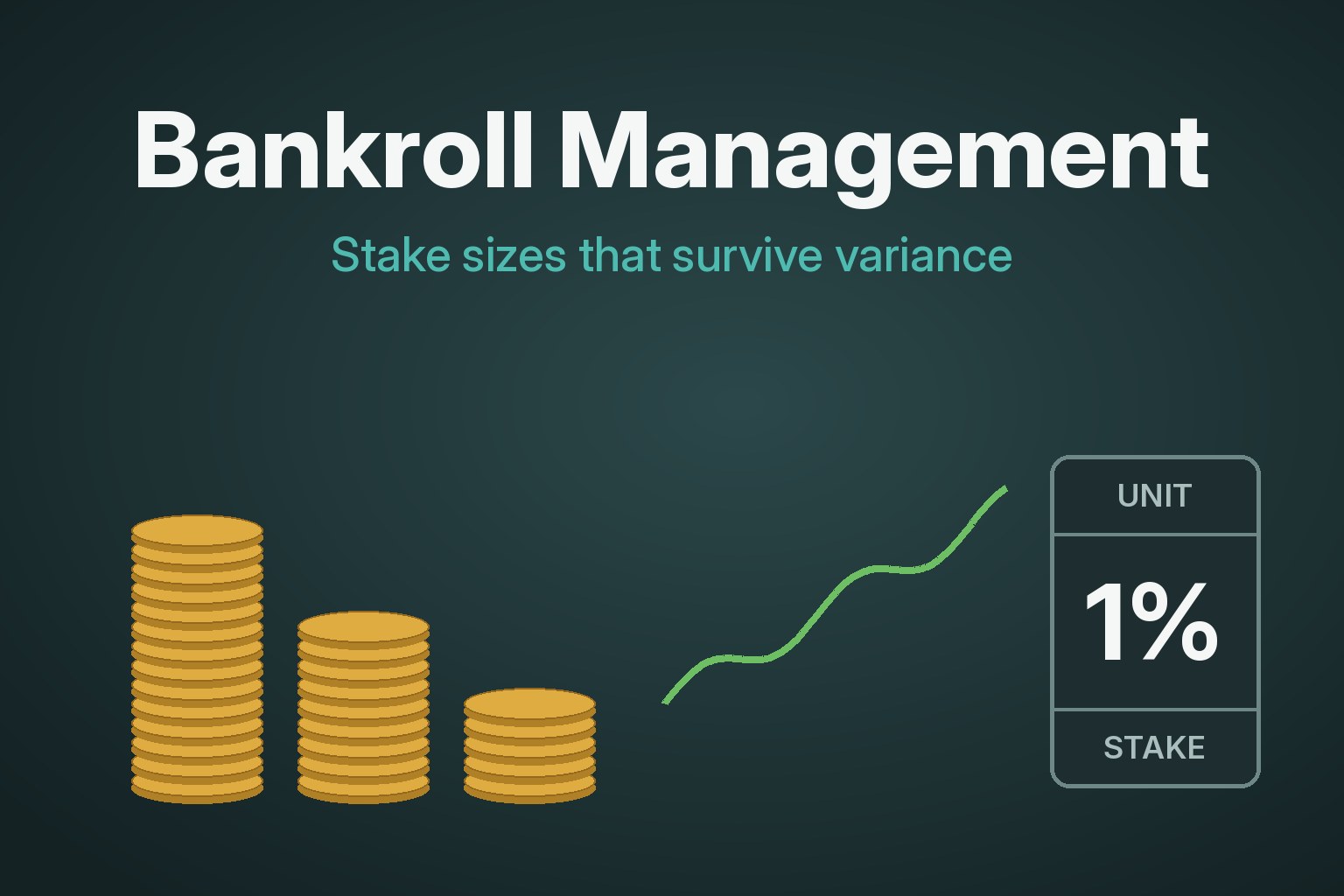
Fractional Kelly gives up a little growth in exchange for much smaller drawdowns and protection against errors in your estimates.
The limits of the Kelly Criterion
Kelly is only as accurate as the probability you feed it. If your model is biased towards overestimating your edge, Kelly will consistently overstake. It also does not handle several bets running at the same time very well. As a rule, start with quarter Kelly, cap any single stake at 2–3% of your bankroll, and only increase it once your records show that your probabilities are well calibrated.