Both Teams To Score (BTTS) is one of the most popular football markets. You do not need to predict the winner, only whether each team will find the net at least once. With a simple Poisson model you can calculate your own BTTS price and compare it with the bookmaker's.
Step 1: Estimate expected goals for each team
Using the Attack Strength and Defence Strength method from our Poisson Distribution article, we previously calculated:
Tottenham expected goals: 1.623 Everton expected goals: 0.824
Step 2: Calculate the chance each team scores
With Poisson, the chance that a team scores zero goals is e to the power of minus its expected goals. The chance it scores at least once is therefore:
P(scores) = 1 – e^(–expected goals)
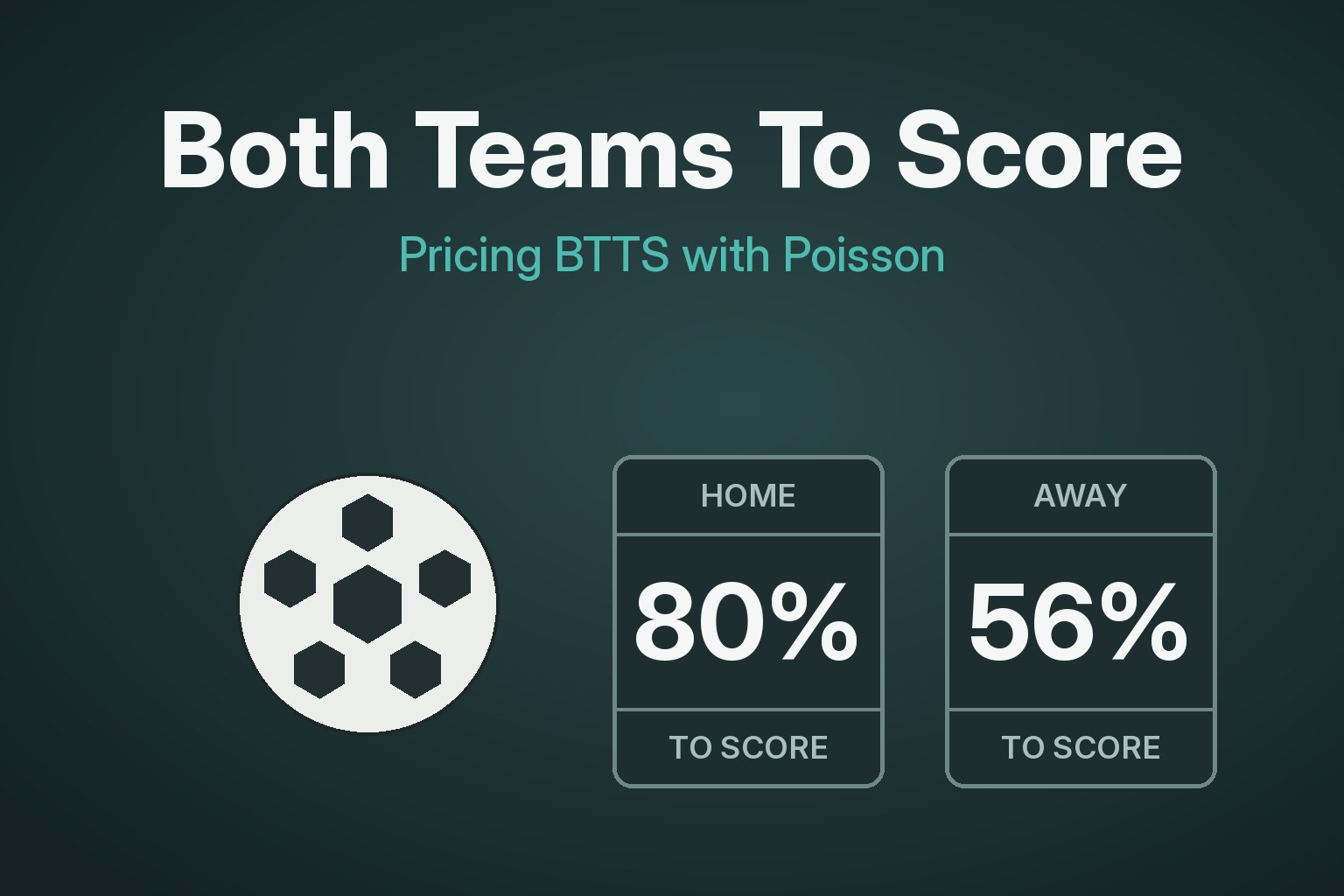
Tottenham: 1 – e^(–1.623) = 80.3% Everton: 1 – e^(–0.824) = 56.1%
Step 3: Combine the two
Assuming the two teams score independently of each other:
BTTS Yes = 80.3% x 56.1% = 45.1% BTTS No = 100% – 45.1% = 54.9%
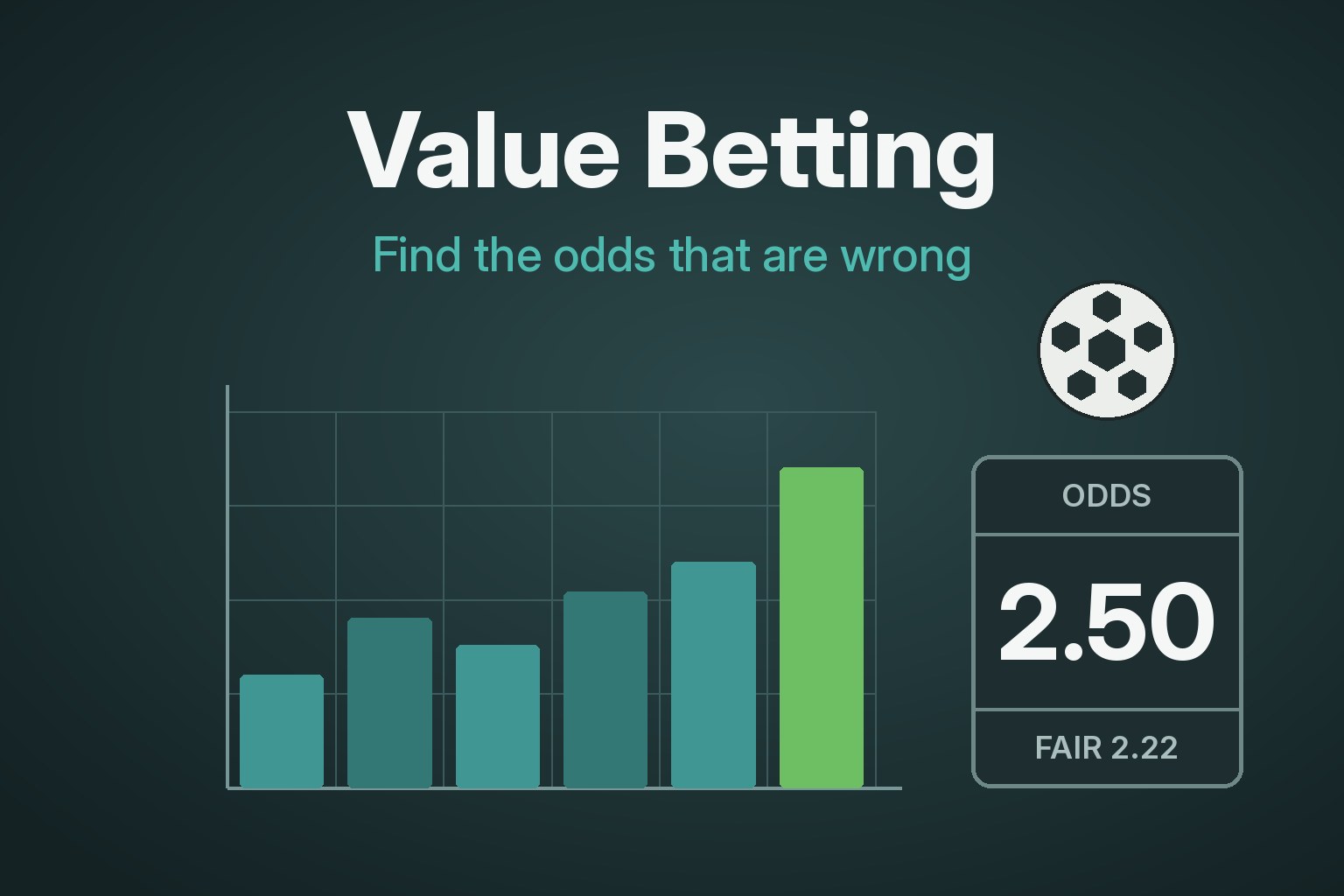
Fair odds for BTTS Yes = 1 / 0.451 = 2.22
Step 4: Compare with the bookmaker
If a bookmaker offers 2.40 on BTTS Yes, the price is higher than your fair odds of 2.22. With a $10 stake:
(0.451 x $14) – (0.549 x $10) = +$0.82
That is a positive Expected Value bet. If the bookmaker offers 2.00, there is no value and you should pass.
What to look for in BTTS matches
Two attacking sides with weak defensive records.
Teams that rarely keep clean sheets, especially away from home.
Matches where both teams need a result, such as late season relegation or promotion battles.
The limits of this method
Poisson assumes goals are independent, but football is not. Once a team goes 1-0 up, it often sits deeper, which changes the chance of the other team scoring. Injuries to key attackers, weather and team motivation are also ignored. Use the model as a starting point and adjust it with your own analysis, rather than following it blindly.